


You did it. You started Ozempic or Wegovy, committed to every dose, and watched the scale move in the right direction. Weeks became months, and the transformation felt real.
And then — somewhere around month two or three — you noticed it.
More hair in the shower drain. A thinner ponytail. A hairline that wasn't as full as it used to be. A brush collecting more than it should.
You started wondering: Is this an Ozempic side effect? Did I do something wrong? Is it going to stop?
Here's the truth: you're not alone, and it's not your fault. Ozempic hair loss and Wegovy hair loss are among the most common — and least talked about — experiences women go through after starting GLP-1 medications. And there's real science behind why semaglutide causes hair thinning.
Is Hair Loss an Ozempic Side Effect?
Yes — and it's officially recognized. Novo Nordisk, the manufacturer of both Ozempic and Wegovy, lists alopecia (hair loss) as a known side effect in Wegovy's prescribing information. Clinical trials found that 2.5% of Wegovy-treated patients experienced hair loss, compared to just 1% of those on placebo.
But the real-world numbers appear to be higher. A 2025 study from the University of British Columbia found that women on semaglutide had more than twice the risk of hair loss compared to women on other weight loss medications. Among all patients in the study who experienced hair loss, 22 were women — and only one was a man.
If you're on Ozempic or Wegovy and your hair is thinning, you are not imagining it.
Why Does Ozempic Cause Hair Loss?
Understanding why semaglutide triggers hair loss helps you know what to do about it. There are two main mechanisms at work:
1. Telogen Effluvium from Rapid Weight Loss
Your hair grows in cycles. At any given time, roughly 85–90% of your follicles are in the active growth phase. The rest are resting.
When your body undergoes significant physical stress — and losing 15–20% of your body weight in a matter of months absolutely qualifies — something called telogen effluvium kicks in. Your body goes into triage mode, redirecting nutrients and energy away from "non-essential" functions.
Hair is considered non-essential.
Large numbers of follicles simultaneously exit the growth phase and enter the resting phase. About two to four months later — when those follicles shed — you start seeing the results in your brush, your drain, and your mirror.
This is why the timing confuses so many women. The shedding doesn't start when you begin Ozempic. It starts months later, often just when you're feeling your best about your weight loss progress.
2. Nutritional Depletion
Ozempic and Wegovy work by suppressing appetite — which means you're eating significantly less. Fewer calories also means fewer of the micronutrients that hair follicles depend on:
- Iron — deficiency is one of the leading causes of hair loss in women
- Zinc — essential for follicle repair and growth
- Biotin — supports keratin production (hair is made of keratin)
- Vitamin D — low levels are strongly linked to hair thinning
- Protein — hair is almost entirely made of a protein called keratin; when intake drops, so does hair growth
3. Hormonal Shifts
Some researchers also believe semaglutide may influence hormone levels in ways that increase the risk of androgenic alopecia — a pattern of hair thinning that can affect the frontal hairline in women. Unlike telogen effluvium, which is typically temporary, androgenic alopecia can persist even after stopping the medication. This is still under investigation, but it's one reason why acting early matters.
Ozempic Hair Loss vs. Wegovy Hair Loss — Is There a Difference?
Both Ozempic and Wegovy contain the same active ingredient: semaglutide. The difference is the dose. Wegovy is prescribed at a higher dose (up to 2.4mg weekly) specifically for weight loss, while Ozempic tops out at 2mg for diabetes management.
Because Wegovy causes more significant weight loss, it also tends to produce more pronounced hair thinning. Clinical trials for Wegovy showed higher rates of hair loss than those for Ozempic at lower doses. If you're on Wegovy specifically for weight loss and experiencing significant shedding, the higher dose — and the more dramatic weight loss it produces — is likely the primary driver.
Mounjaro and Zepbound (tirzepatide) show similar patterns. Clinical trials found 5–6% of tirzepatide users experienced hair loss at higher doses — slightly more than semaglutide users, likely because tirzepatide tends to produce even greater weight loss.
How Long Does Ozempic Hair Loss Last?
For most women, semaglutide-related hair loss associated with telogen effluvium is temporary. The follicles haven't been destroyed — they've been paused. Once your body stabilizes at its new weight and nutritional balance is restored, the follicles typically re-enter the growth phase.
Most women report that shedding slows at the 3–6 month mark, and that new growth becomes visible — especially baby hairs along the hairline — at the 6–12 month mark.
However, recovery is not automatic. What you do during this window matters. A scalp under nutritional stress does not recover well if you're also exposing it to harsh chemicals, sulfates, and stripping agents every time you wash your hair.
The Biggest Mistake Women Make After Ozempic Hair Loss Starts
When the shedding begins, the instinct is to reach for whatever promises the fastest fix — thickening shampoos loaded with sulfates, heavy conditioners packed with silicones, or medicated treatments that an already-stressed scalp isn't ready for.
The problem: most of these products were designed for a healthy scalp at baseline. A scalp dealing with nutritional depletion and hormonal fluctuation from Ozempic or Wegovy isn't that. And here's what harsh conventional shampoos do to it:
Sulfates strip the scalp's natural protective oils, weaken already-fragile follicles, and create dryness and inflammation — exactly where you need calm and recovery.
Silicones coat the hair shaft and build up on the scalp, creating a film that blocks follicles that are trying to recover.
Synthetic fragrances and preservatives add unnecessary chemical load to a scalp that's already managing significant internal stress from the medication itself.
You end up adding chemical stress on top of physical stress. The hair loss continues — and sometimes worsens.
What Actually Helps with Ozempic Hair Loss
The good news: because most GLP-1 hair loss is driven by telogen effluvium — a temporary stress response — the follicles can and do recover with the right support.
1. Switch to a sulfate-free shampoo immediately. This is the single most impactful change you can make to your hair care routine. Sulfate-free formulas clean effectively without stripping the scalp's natural barrier. For a scalp already compromised by semaglutide-related nutrient depletion, this is non-negotiable.
2. Prioritize scalp health over hair appearance. Hair grows from the scalp. If the scalp is inflamed, clogged, or stripped, recovery is delayed. Focus your routine on ingredients that soothe and nourish at the root level — not ingredients that make the existing hair look temporarily thicker while doing nothing for new growth.
3. Increase protein intake. If you're on Ozempic or Wegovy, you're almost certainly eating less protein than your body needs for hair maintenance. Aim for at least 80–100g of protein daily. This is one of the most effective dietary interventions for semaglutide hair loss.
4. Check your bloodwork. Ask your doctor to check iron (ferritin specifically), zinc, vitamin D, and B12. These are the micronutrients most commonly depleted during rapid weight loss. Supplementing what's deficient can meaningfully accelerate hair recovery.
5. Be consistent and patient. Hair grows slowly — about half an inch per month. The follicles that went dormant during your most rapid weight loss phase won't produce visible results overnight. Most women who make genuine changes to their scalp care routine start seeing baby hairs and improved density at the 6–10 week mark.
Why Tree Bottle Was Made for This Moment
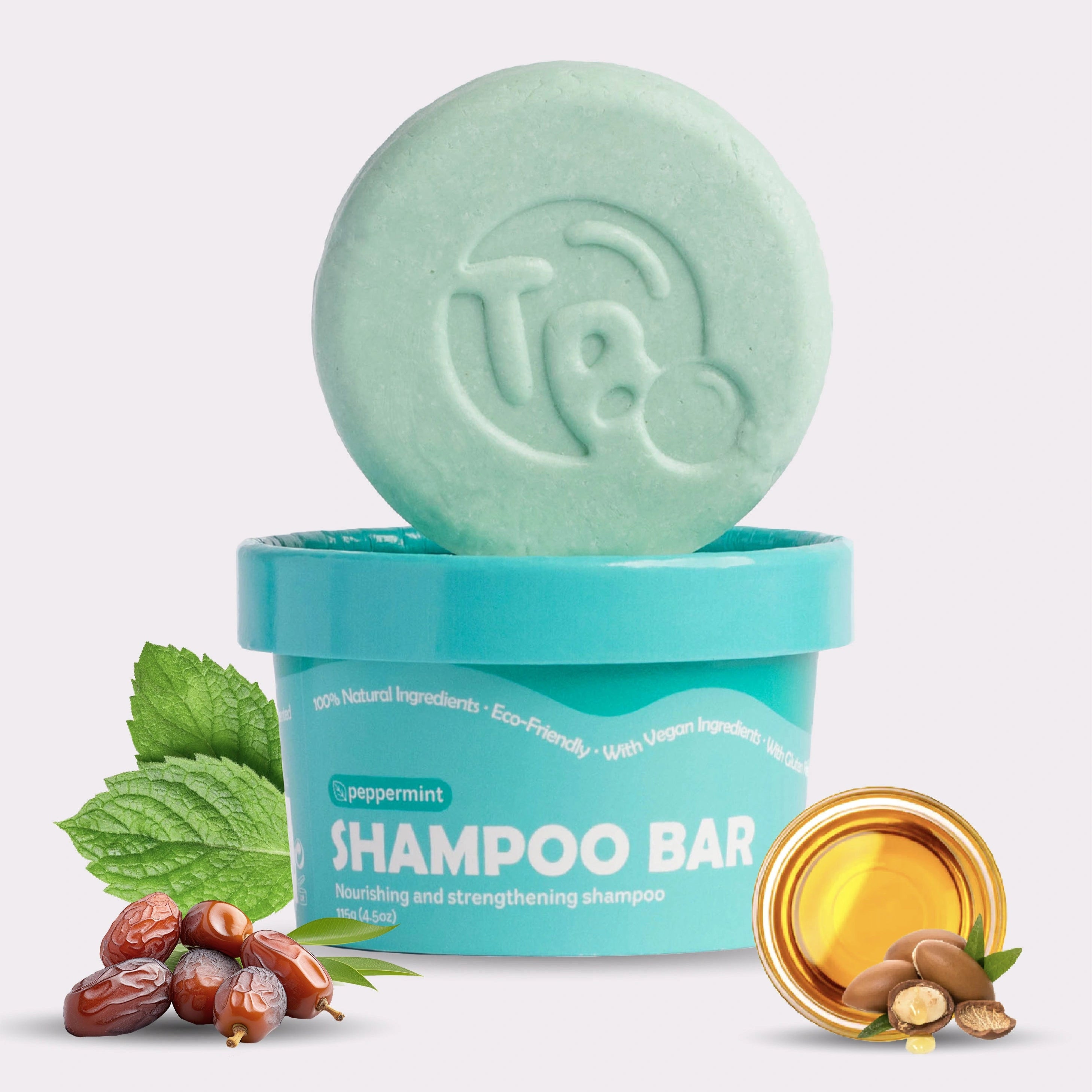
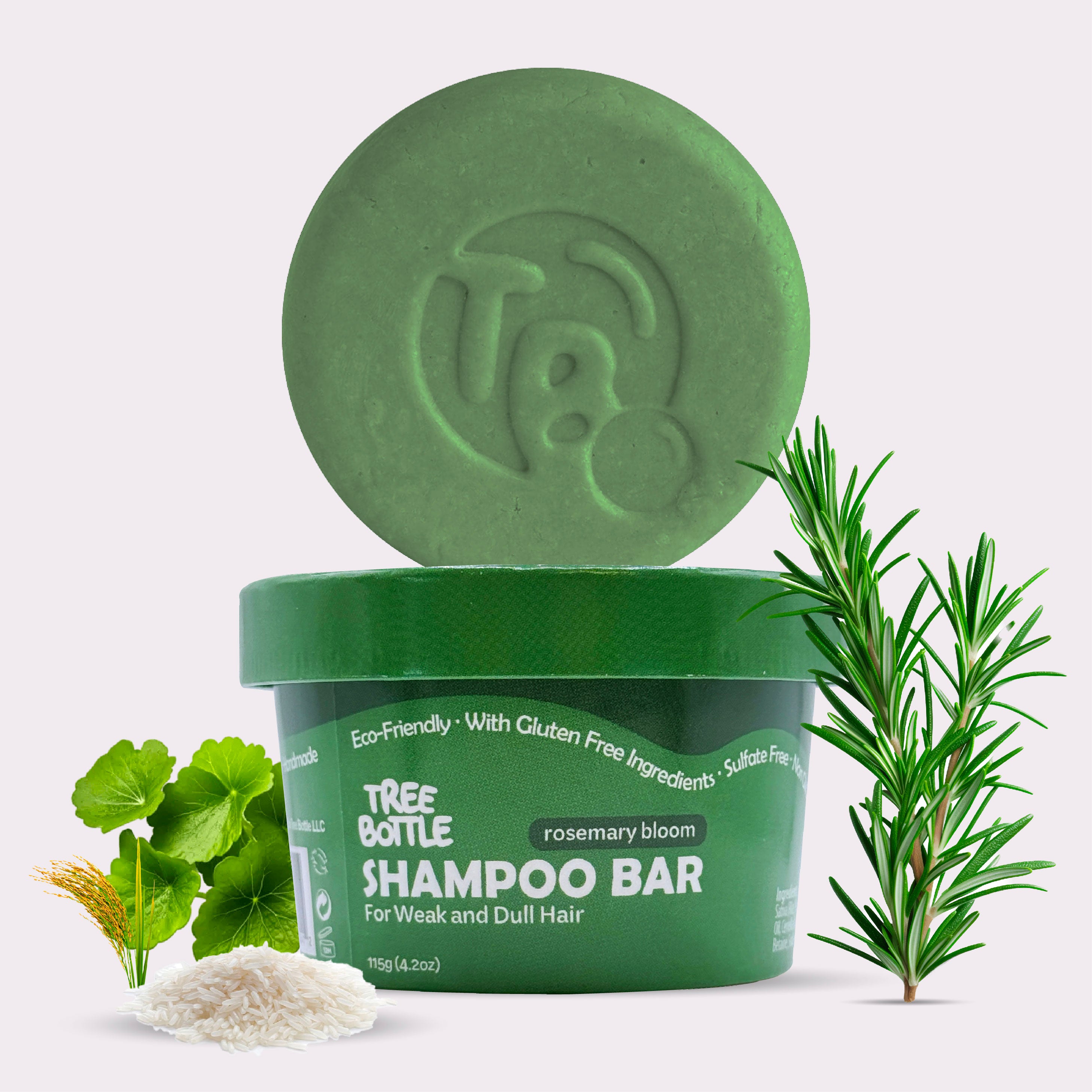
Tree Bottle Shampoo Bar was built around one belief: your scalp deserves clean — especially when it's already under stress.
No sulfates. No parabens. No silicones. No plastic waste. Just plant-based, carefully selected ingredients that work with your scalp's natural biology instead of stripping it.
We designed Tree Bottle for women who are taking their health seriously and don't want their hair care routine undoing what their body is trying to recover. For women on Ozempic, Wegovy, or any GLP-1 medication, that means:
✅ Sulfate-free — no stripping of an already-vulnerable scalp ✅ Plant-based and gentle — clean ingredients with nothing your follicles don't need ✅ Supports healthy hair and scalp — nourishing from root to tip ✅ Strengthens and nourishes — supporting the keratin structure of each strand ✅ Vegan and eco-friendly — no compromise on values or results
What Women Are Saying
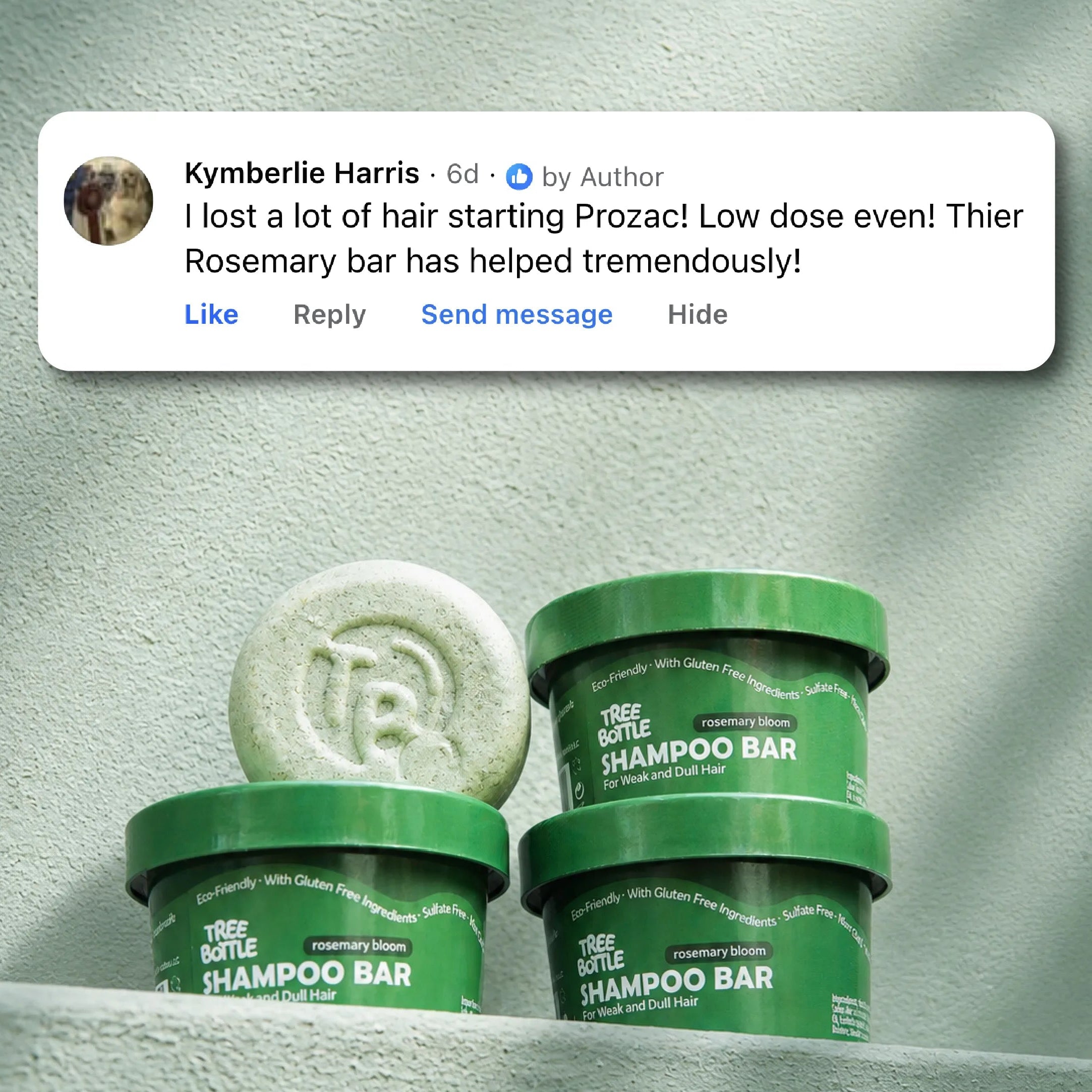
"I was losing so much hair every time I brushed — I started dreading my morning routine. I've been using Tree Bottle for six weeks and I can see baby hairs growing back at my hairline. I didn't expect a shampoo bar to be the thing that actually helped."
"My doctor told me the Ozempic hair loss was temporary and to just wait it out. But I didn't want to wait. Tree Bottle made my scalp feel calm for the first time since I started the injections."
"I lost the weight I wanted. But I wasn't ready to lose my hair. Tree Bottle helped me feel like myself again."
The Bottom Line on Ozempic Hair Loss
Ozempic and Wegovy are changing lives. The weight loss is real, the health benefits are real, and for millions of women, these medications have been genuinely transformative.
But so is the hair loss — and you deserve to know about it, understand why it happens, and have real options for doing something about it.
The shedding you're experiencing is your body's response to a major transformation. The follicles aren't gone. With the right support — clean ingredients, restored nutrition, and a little patience — your hair can come back.
You did the hard part. You won the weight. Now win your hair back.
Ready to support your scalp through your weight loss journey? Shop Tree Bottle Shampoo Bar →
Sulfate-free · Plant-based · Vegan · Supports hair & scalp health
This article is for informational purposes only and does not constitute medical advice. Ozempic® and Wegovy® are registered trademarks of Novo Nordisk. Tree Bottle is not affiliated with or endorsed by Novo Nordisk. If you are experiencing significant hair loss, consult with your healthcare provider.